
Ready To Grow Your Gym?
Ready To
Grow Your Gym?
We help gym owners grow and scale their gyms to make more money. Book a demo to find out how our Flywheel Attraction System can help you get more members and work less hours
Stop Trading Time for Money. Start Building an Asset.
WHERE
GYMS MEET PROFITABILITY
Welcome to Gym Academy. We specialize in transforming passionate gym owners into profitable CEOs. Many gym owners get stuck in the 'owner-operator' trap, working 60 hours a week just to pay the bills. We launched Gym Academy to change that. We deliver real, no-fluff strategies that move you out of the day-to-day grind and turn your facility into a scalable, high-profit asset.
Join the program that has helped hundreds of gym owners scale their business
Our method makes marketing and client acquisition accessible to any gym owner, even those who've failed with other programs!
Real results from real gym owners
A new era in gym marketing:
where AI meets client acquisition
Where Less Clients Means More Money
AI is amongst the most disruptive technologies of the last decade. Our proprietary AI marketing and sales system now helps you streamline your business in a way that's never been possible before…
From AI-powered lead nurturing to automated follow-ups, client acquisition & so much more.
500+ Gym Owners & Counting
We're in the business of helping gym owners get the most out of their business while working less.
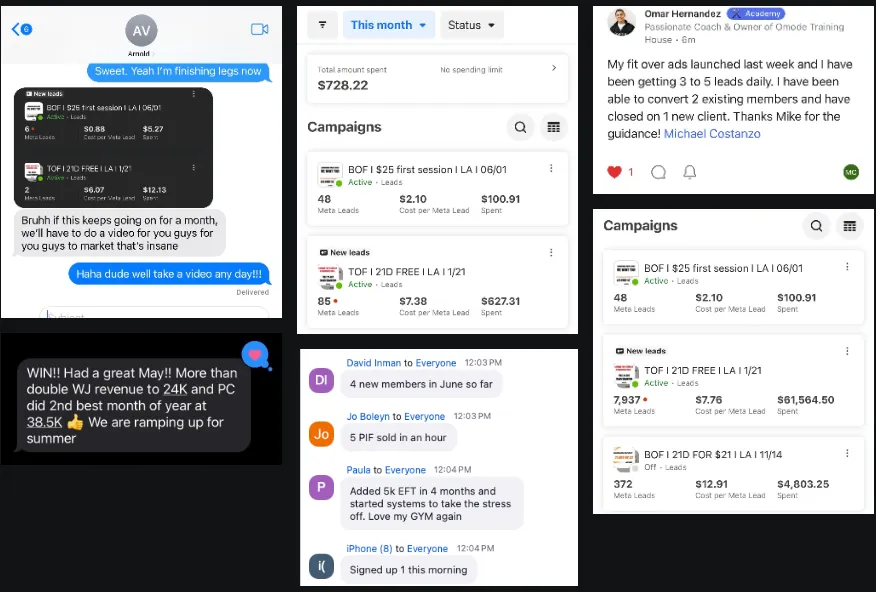
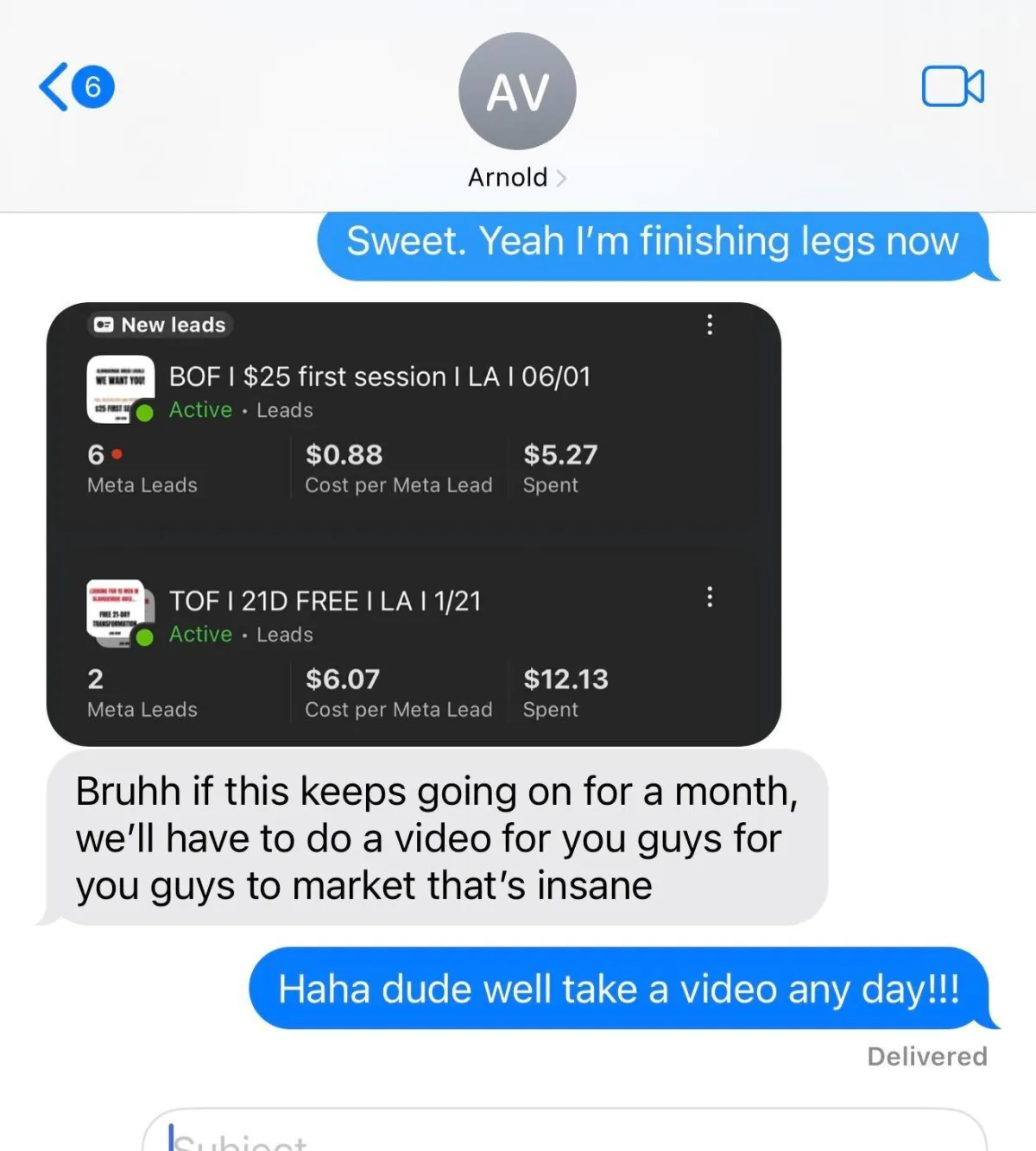
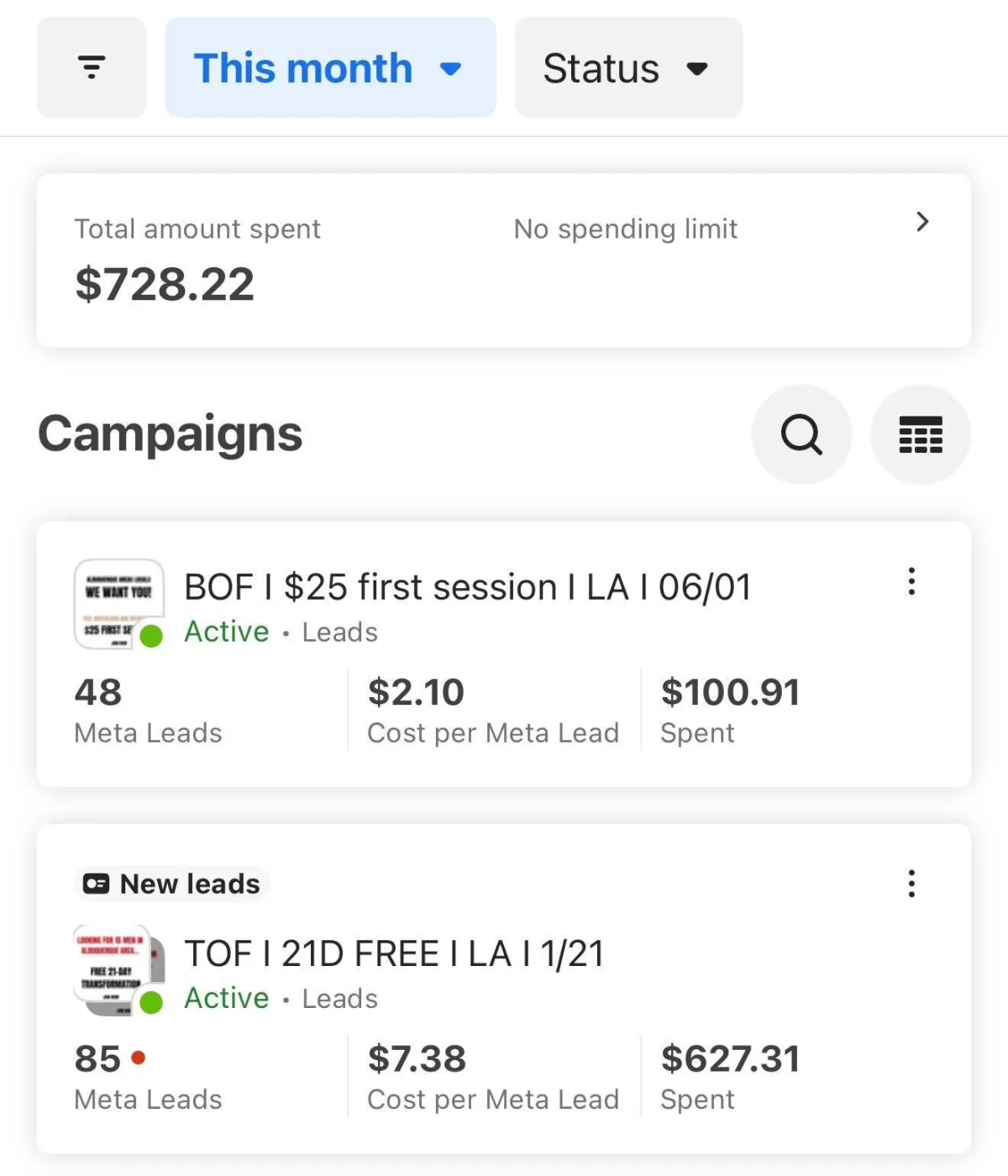
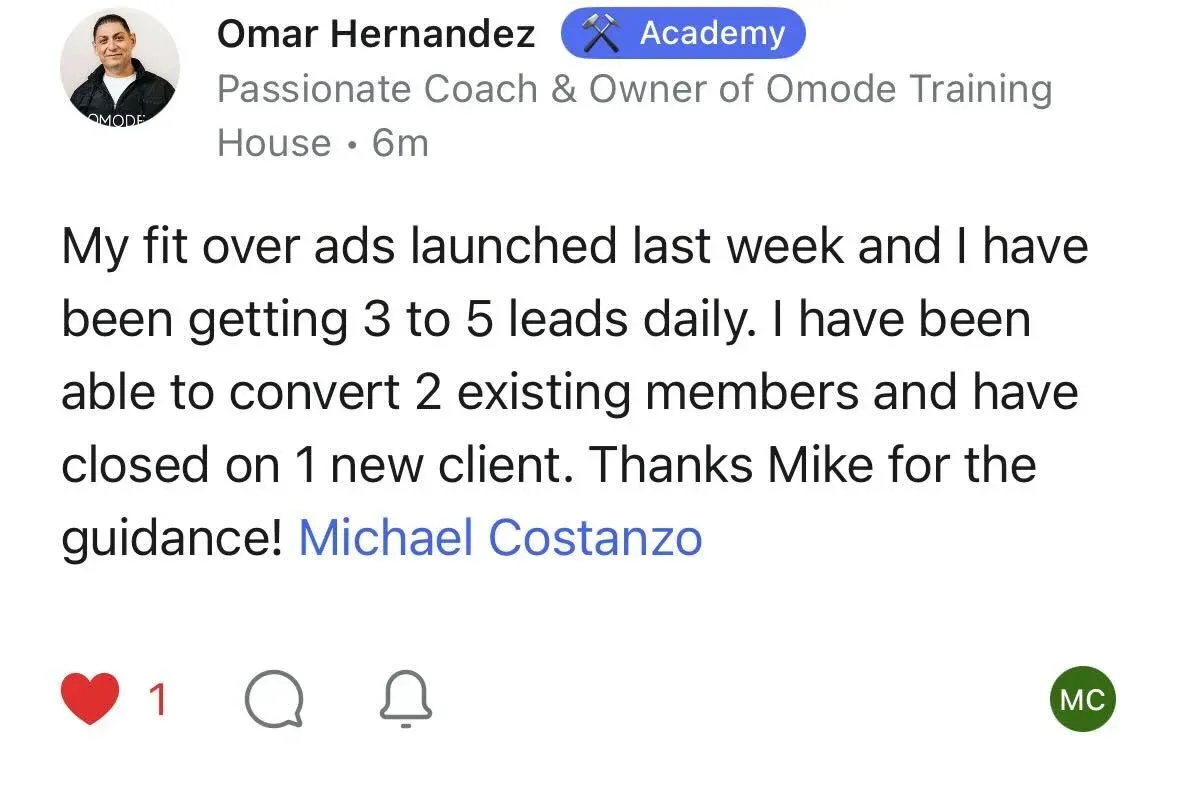
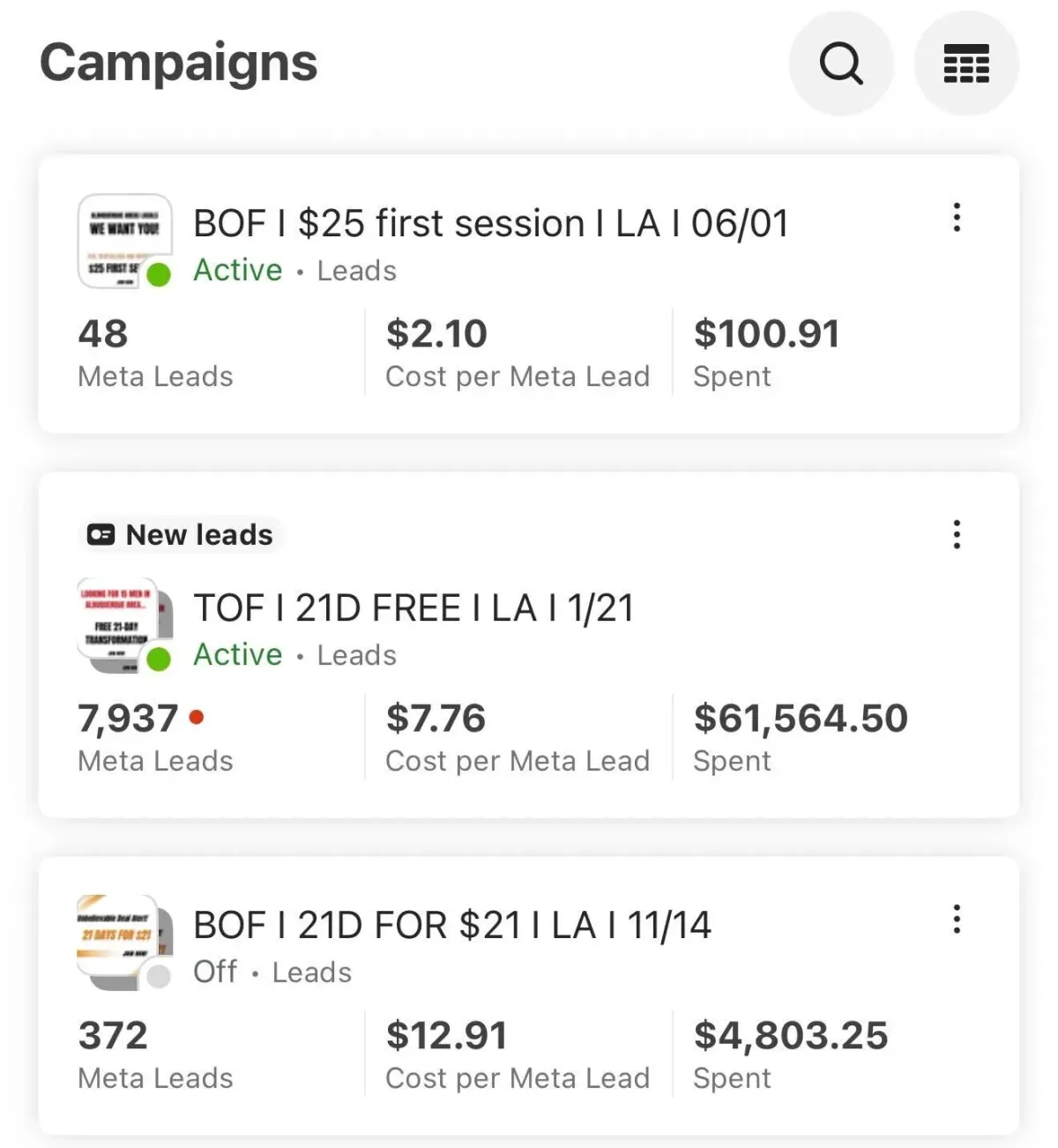
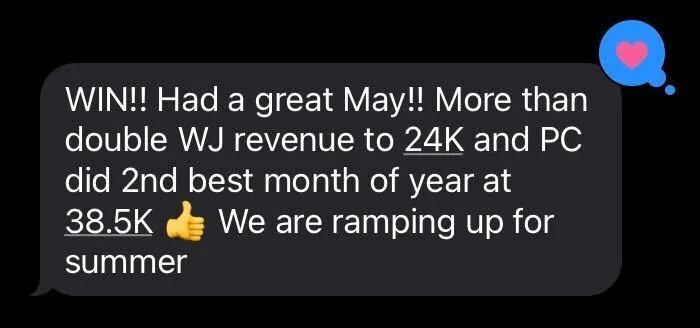
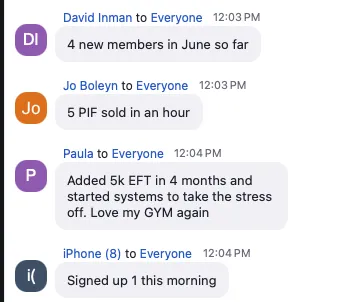
This is a collection of our top reviews from Google.
4.8/5 stars in 100+ reviews

Gym Academy has helped me get a grasp of my business and taught me to operate my personal training and gym in business like an actual business understanding numbers like my ad spend, where my revenue is coming from, where I need to focus my efforts to grow my business, How to assemble a team and manage a team. A lot of stuff I really had no idea about With their help, I’ve taken my gym from 6000 recurring to 21,000 monthly recurring in nine months
I’ve worked in retail, functional medicine, and now as the GM of Temple Fitness since December 2024. I can honestly say working with Gym Academy has completely transformed my approach to leadership and growth. The quality of training and systems they provide is unmatched. Ryan’s sales training compressed years of growth into just months, while Mike helped me bring my onboarding and team-building experience into the gym world. Josh and Bob are down-to-earth, hands-on leaders who empower you to be the best version of yourself and build systems that drive success. I’ve been in the fitness world my whole life but hesitated to make it a career due to industry challenges. Gym Academy has made it possible to thrive—if you’re serious about growing your gym and changing lives, this is where you should invest.
I am thoroughly enjoying the process of growing my gym. The gym academy team is awesome. Everyone that I have worked with has been understanding and caring about the issues with my business while having a solution to solve those problems. I have already made back my investment plus some in a little over 30 days. They teach you how to operate your business properly while increasing income long term. Highly recommend!
They are great if you have a traditional gym. If you are any type of specialty studio there cookie cutter methods do not work well. Be prepared to shell out 10k in your first 30 days. Wouldn’t recommend.
Joining Gym Academy has been a total game-changer for my fitness studio! Six months ago, I was struggling—keeping my doors open was costing me money, and despite trying multiple marketing companies, I wasn’t seeing real growth. What I quickly realized after joining Gym Academy is that running a successful studio is so much more than just good ads. With Bob and the team’s constant guidance (shout out to my CSM, Ryan), I’ve learned how to have effective conversations that actually convert leads into long-term members while keeping attrition low. Mindset is EVERYTHING too. Beyond that, my entire operational structure has been optimized—I’ve eliminated inefficiencies, cut waste, and now run my studio in a way that’s profitable and scalable. The daily Sales and Marketing calls provide invaluable insights, and the community of studio owners supporting each other makes all the difference. If I ever have a challenge, I know I can ask for help, and immediate, actionable advice is always there. I’m no longer alone on an island, trying to figure things out. No more sleepless nights worried if I'm going to make rent or payroll. Joining Gym Academy has been the single most important strategic move I’ve made since opening my doors. If you're a studio owner struggling to grow, don’t wait—this is the place you need to be! 💪🔥 #GameChanger #GymAcademy #StudioSuccess
Gym Academy has been the best experience. As a result I feel in complete control of my business, I have a clear and doable program seriously accelerating the growth of my studio! Ryan Simpson Shares genuine excitement with my wins. It’s been exciting and inspiring and brought new hope and life back into my relationship with my business!
Before joining Gym Academy I was in a desperate spot. I had a great product a beautiful gym and NOT ENOUGH CLIENTS to survive! However, since joining Gym Academy last year my yearly sales DOUBLED. This is a no joke program... no secret sauce, no hidden magic formula, just tried and true sales and marketing training that will get you a reliable stream of clients so you can finally have the gym of your dreams!

"LITERALLY SAVED MY GYM AND MY SANITY"
. Felicia B.
Gym Academy's Blog
Gym Business Coaching: What to Look For and What to Avoid
Gym Business Coaching: What to Look For and What to Avoid
Gym business coaching helps gym owners move from working in their business to working on their business through systematic guidance, accountability, and proven frameworks. The right coaching program can accelerate growth by 18-24 months by helping you avoid expensive mistakes and implement tested systems faster than figuring things out alone. The wrong program wastes $10,000-30,000 while delivering generic advice that doesn't fit your specific situation.
Most gym owners consider coaching when they're stuck at a revenue plateau, working 60+ hours weekly without profit, or losing members as fast as they're acquiring them. Quality gym business coaching from programs like Gym Academy focuses on building complete systems for acquisition, retention, and operations rather than teaching isolated tactics. Here's how to evaluate coaching programs and decide whether coaching makes sense for your situation.
When Your Gym Needs Business Coaching
Not every gym needs coaching. Some situations call for it. Others don't. Understanding when coaching makes sense versus when you should take a different approach saves money and time.
Situations where coaching makes sense:
You're stuck at a revenue plateau despite trying various tactics. You've hit $20K, $30K, or $40K monthly and can't break through. You're working harder but revenue stays flat. This signals a systems problem, not an effort problem. Coaching helps you identify what's holding you back and build systems that enable growth.
You're working 60+ hours weekly with minimal profit. Long hours should correlate with income. If you're grinding without seeing profit growth, you're working on the wrong things. Coaching helps you focus on high-leverage activities and delegate or eliminate everything else.
You're replacing members as fast as you acquire them. High churn means either you're attracting wrong-fit members or failing to deliver value. Coaching helps you fix both through better positioning and systematic retention.
You have multiple tactics but no coherent strategy. You've tried Facebook ads, Instagram posting, referral programs, and local partnerships. Some worked temporarily. Nothing created sustainable growth. Coaching helps you build an integrated strategy where tactics support each other.
You're ready to scale but don't know how. Single location is working but you want to open a second location or dramatically grow your current facility. Coaching provides the operational frameworks needed for scale.
You're willing to invest $10,000-30,000 and commit 6-12 months. Coaching isn't cheap and doesn't work overnight. If you can't invest this time and money, coaching isn't right yet.
Situations where coaching doesn't make sense:
You haven't validated basic product-market fit. If you're brand new with fewer than 20 members and haven't proven people want what you offer, coaching is premature. Prove your concept first.
You're not willing to implement what you learn. Some gym owners want information without doing the work. They attend coaching calls, nod along, and never implement. If you're not committed to execution, save your money.
You expect coaching to do the work for you. Coaching provides guidance, not labor. You still need to execute marketing, handle sales, manage operations, and lead your team. If you want someone to do it for you, hire employees or agencies, not coaching.
You're looking for a magic bullet. No single tactic will transform your business. Growth comes from building complete systems. If you want "the one thing that will change everything," coaching will disappoint you.
Your financial situation is desperate. If you're two months from closing and can barely cover rent, coaching probably isn't the right investment. Use that money for immediate revenue generation or cost reduction. Get stable first, then invest in coaching.
You have personality conflicts with coaching style. Some programs are highly structured and prescriptive. Others are more flexible and advisory. If the coaching style doesn't match your working style, it won't work regardless of program quality.
The honest self-assessment:
Before spending $10,000-30,000 on coaching, answer these questions:
Am I willing to implement uncomfortable changes? (Raising prices, firing problem clients, changing my schedule) Can I commit 5-10 hours weekly to coaching calls and implementation? Do I have 6-12 months to see results without needing immediate transformation? Can I afford the investment without creating financial stress? Am I coachable and willing to follow systems even when they feel wrong initially?
If you answered yes to all five, coaching makes sense. If you answered no to any, address those issues before investing in coaching.
The Difference Between Coaching, Consulting, and Mentoring
These terms get used interchangeably but describe different service models. Understanding the differences helps you choose what you actually need.
Coaching:
Coaching provides ongoing guidance, accountability, and support as you build your business. A coach asks questions, helps you think through problems, and holds you accountable to your goals. The coach doesn't do the work or make decisions for you. You maintain ownership and responsibility.
What coaching includes:
Regular calls (weekly or biweekly) to discuss progress and challenges
Access to frameworks and systems you implement
Accountability for executing what you commit to
Problem-solving when you hit obstacles
Community of other gym owners for peer learning
What coaching doesn't include:
Done-for-you implementation
Daily hand-holding through every decision
Guarantee of specific results
Someone to blame if you don't execute
Best for: Gym owners who need strategy, accountability, and frameworks but can handle implementation themselves.
Consulting:
Consulting provides expert analysis of specific problems with recommendations for solutions. A consultant analyzes your situation, identifies issues, and delivers a report or presentation with recommendations. Implementation is usually on you, though some consultants offer implementation services for additional fees.
What consulting includes:
Deep analysis of specific business area (marketing, operations, finances)
Expert recommendations based on analysis
Written deliverables documenting findings and suggestions
Sometimes limited follow-up to answer questions
What consulting doesn't include:
Ongoing support after delivery of recommendations
Accountability for implementation
Adaptation of recommendations as your situation evolves
Best for: Gym owners who need expert analysis of specific problems and can implement recommendations independently.
Mentoring:
Mentoring provides informal guidance from someone who's achieved what you want to achieve. A mentor shares experiences, offers advice when asked, and helps you navigate challenges. The relationship is usually less structured than coaching and often involves no financial transaction.
What mentoring includes:
Occasional conversations about challenges and opportunities
Sharing of personal experiences and lessons learned
Introductions to helpful contacts
Advice based on mentor's experience
What mentoring doesn't include:
Structured curriculum or systematic approach
Regular scheduled meetings
Accountability for implementation
Guarantee of availability when you need help
Best for: Gym owners who have specific questions or want perspective from someone who's been through similar situations.
Which model is right for you:
Need systematic guidance on building complete business systems? → Coaching Need expert analysis of a specific problem? → Consulting Need occasional advice from someone with relevant experience? → Mentoring Need someone to do the work for you? → Hire employees or agencies, not coaching/consulting/mentoring
Most gym owners need coaching when they're ready to systematically grow their business. Consulting works for specific problems like "analyze why my ads aren't converting" or "review my P&L and identify waste." Mentoring happens organically through relationships.
Red Flags in Gym Business Coaching Programs
Not all coaching programs are created equal. Some deliver tremendous value. Others waste money while providing generic advice. Here are warning signs that a coaching program won't deliver.
Red flag 1: Promises of specific results
"Add 50 new members in 60 days" or "Double your revenue in 90 days." These guarantees are red flags. No coach can guarantee results because success depends on your execution, market, and situation. Ethical coaches discuss typical results while acknowledging variation.
What you should hear instead: "Our clients typically see X results within Y timeframe, though results vary based on starting point and implementation."
Red flag 2: One-size-fits-all approach
Programs that give identical advice to every gym regardless of size, market, or situation. A gym in rural Montana needs different tactics than a gym in Manhattan. A 50-member facility needs different systems than a 300-member facility.
What you should see instead: Frameworks adapted to your specific situation with customization based on your market, size, and goals.
Red flag 3: Tactics over systems
Programs focused on teaching individual tactics (Facebook ads, Instagram growth, email marketing) without connecting them into complete systems. Tactics change. Systems endure. You need both, but systems should come first.
What you should get instead: Complete business systems for acquisition, retention, pricing, operations, and management. Tactics should support systems, not replace them.
Red flag 4: High-pressure sales tactics
Coaches who use manufactured urgency, false scarcity, or aggressive closing during their sales process. If they're pressuring you to join "today or the price goes up," that's how they'll teach you to treat prospects. Bad sales practices during enrollment predict bad coaching.
What you should experience instead: Consultative sales process that helps you determine if coaching is right for you without pressure.
Red flag 5: No clear curriculum or process
Programs that describe what you'll learn vaguely. "We'll help you grow your gym" or "You'll learn marketing and sales" without specifics about what systems you'll build or what order you'll build them.
What you should see instead: Clear description of what you'll learn, what order you'll learn it, and what you'll have implemented by the end of the program.
Red flag 6: Coach has never run a successful gym
Some coaches teach gym business without ever successfully running one. They've read books, taken courses, or consulted for others but never built a gym from zero to success. Theory differs from practice.
What you should verify: Coach has personally built successful gym(s) and can show evidence of real results, not just teaching credentials.
Red flag 7: No access to other successful clients
Programs that won't introduce you to current or past clients. If the coaching works, clients should be happy to share experiences. Refusal to provide client references suggests problems.
What you should get: Access to testimonials, case studies, or conversations with current/past clients who've achieved results.
Red flag 8: Long contracts with no exit options
Programs requiring 24-36 month commitments with no ability to cancel if coaching isn't working. This protects the coach at your expense.
What you should see instead: Reasonable commitment periods (6-12 months) with clear terms about what happens if you need to exit early.
Red flag 9: Claims their approach is the only way
Coaches who dismiss all other approaches as wrong. "Everyone else teaches outdated tactics. We're the only ones who know how to grow gyms." This arrogance usually masks insecurity about their methods.
What you should hear instead: Acknowledgment that multiple approaches can work while explaining why they teach what they teach.
Red flag 10: No clear business model or pricing transparency
Programs that won't share pricing until after extensive sales calls or that constantly change pricing based on negotiation. This suggests they're maximizing what they can extract rather than delivering consistent value.
What you should get: Clear pricing structure published upfront. You should know what it costs before spending hours in sales conversations.
What Actually Moves the Needle (Systems Over Tactics)
The difference between effective coaching and wasteful coaching is focus. Bad coaching teaches tactics. Good coaching builds systems. Understanding this difference helps you evaluate programs.
Why systems matter more than tactics:
Tactics change constantly. What worked on Facebook last year doesn't work this year. Instagram algorithms shift. Google changes search ranking factors. If you learn tactics, you're constantly relearning as platforms change.
Systems remain stable. A systematic approach to lead generation works regardless of which specific channels you use. A systematic retention program works whether you're using email, text, or app-based communication. Build systems and tactics become interchangeable within them.
Complete systems compound. A great Facebook ad strategy helps acquisition. But without retention systems, those new members cancel. Without pricing systems, you're undercharging. Without sales systems, you convert poorly. Systems working together create exponential results that tactics can't match.
Systems work without you. Tactics often depend on founder involvement. Systems run through your team. This is how you stop working 60 hours weekly and start building a business that operates without constant attention.
The core systems every gym needs:
Client acquisition system that generates consistent qualified leads through multiple channels, nurtures them systematically, and converts them at 35-45%. This includes positioning, lead generation, nurturing, and sales.
Client retention system that onboards members properly, delivers early wins, builds community, and keeps members engaged 12+ months. This includes onboarding, progress tracking, community building, and intervention for at-risk members.
Pricing system that positions offers around outcomes, structures tiers that serve different client segments, and allows premium pricing through value demonstration. This includes offer design, tier structure, and pricing psychology.
Operations system that defines roles clearly, documents processes, tracks key metrics, and runs without constant owner involvement. This includes org charts, SOPs, KPIs, and delegation frameworks.
Team system that recruits quality people, trains them effectively, provides accountability, and creates culture that retains top performers. This includes hiring, onboarding, coaching, and recognition.
What good coaching should build:
Month 1-2: Client acquisition system Months 3-4: Client retention system
Months 5-6: Pricing and offer system Months 7-8: Operations and delegation Months 9-12: Team development and scale preparation
This sequential approach builds foundation first, then layers additional systems. You can't scale before you have retention working. You can't optimize retention before you have consistent acquisition.
Red flag coaching focus:
Programs that jump between tactics without building systems. Week 1 is Facebook ads. Week 2 is Instagram. Week 3 is email marketing. Week 4 is Google Ads. You're learning tactics but building nothing cohesive.
Programs that focus exclusively on one area. "We only teach Facebook ads" or "We only do sales training." These aren't business coaching. They're tactic training. You need complete business systems, not isolated skill development.
Programs that teach outdated approaches. "Here's how we grew our gym in 2015" might not work in 2025. Coaching should be current with platform changes, market shifts, and evolving consumer behavior.
Understanding how these systems work together is important. Our guide on the No Selling Sales System explains how consultative sales connects to retention and acquisition.
How to Evaluate Coaching ROI
Coaching costs $10,000-30,000 annually. That's a significant investment for most gyms. You need clear ROI expectations and ways to measure whether coaching is working.
Calculating acceptable coaching investment:
Your customer lifetime value determines how much you can invest in coaching. If average member lifetime value is $2,000 and coaching helps you add 20 members in 12 months, that's $40,000 in lifetime value. If coaching cost $20,000, your ROI is 2:1 (gained $40K, spent $20K).
But coaching should do more than help you acquire members. It should also improve retention (increasing LTV), enable premium pricing (increasing monthly revenue), and reduce owner time (creating operational leverage).
More comprehensive ROI calculation:
Additional members added × LTV = Revenue impact from acquisition
Improved retention rate × member base × average monthly rate × additional months retained = Revenue impact from retention
Price increases × member base = Revenue impact from pricing
Owner time saved × opportunity cost = Operational impact
Total value created - coaching investment = Net ROI
ROI expectations by starting point:
Gyms doing $10-20K monthly should expect 3-5x ROI from good coaching. You're building foundations that create exponential returns. $20K coaching investment should generate $60-100K in value through new members, better retention, and improved operations.
Gyms doing $30-50K monthly should expect 2-3x ROI. You already have basics working. Coaching helps you optimize and scale. $25K investment should generate $50-75K in value.
Gyms doing $75K+ monthly should expect 1.5-2x ROI. You're optimizing mature operations. Returns are still positive but smaller percentage gains. $30K investment should generate $45-60K in value.
Timeline expectations:
Month 1-3: Implementation phase. You're building systems but haven't seen significant results yet. This feels expensive because you're investing without immediate return.
Month 4-6: Early results phase. New acquisition systems start generating leads. Retention improvements show up in reduced cancellations. You see first proof that coaching is working.
Month 7-9: Acceleration phase. Multiple systems working together create compound returns. New members stay longer due to better retention. Premium pricing increases revenue per member. Operations improvements free your time.
Month 10-12: Full ROI phase. Complete systems running properly should have generated 2-3x return on coaching investment by end of first year.
When coaching isn't working:
Month 3 checkpoint: You should have implemented at least one complete system (usually acquisition). If you haven't built anything concrete by month 3, something is wrong. Either the coaching isn't providing clear direction or you're not executing.
Month 6 checkpoint: You should see measurable improvements in key metrics. More leads, better conversion, improved retention, or increased operational efficiency. If numbers haven't moved at all, the coaching approach isn't working for you.
Month 9 checkpoint: You should have clear path to ROI. Can you see how the systems you've built will generate 2-3x return? If you can't see the path to ROI by month 9, you likely won't hit it by month 12.
If coaching isn't working, address it directly with your coach. Sometimes simple adjustments fix the problem. Other times you need to exit and find a better fit.
Questions to Ask Before Hiring a Gym Coach
These questions help you evaluate whether a coaching program will deliver value. Ask them during sales conversations before committing.
About the coach's experience:
"What gyms have you personally owned and operated?" (Verify they've done what they teach, not just studied it)
"What revenue levels did your gym(s) reach?" (Confirm they've achieved the scale you're aiming for)
"How long ago did you actively run a gym?" (Recent experience is more relevant than decades-old success)
"What results have your coaching clients achieved?" (Look for specific numbers, not vague claims)
"Can I speak with 3-5 current or past clients?" (Client references reveal program strengths and weaknesses)
About the coaching structure:
"What exactly will we build together over the coaching period?" (Should get specific answer about systems and sequence)
"How much time will this require from me weekly?" (Understand the commitment before signing)
"What happens if I fall behind on implementation?" (Learn how they handle clients who struggle with execution)
"How do you adapt the program to different situations?" (One-size-fits-all is a red flag)
"What support do I get between calls?" (Email? Text? Community? Or only during scheduled calls?)
About the program content:
"What are the first three systems we'll build?" (Should have clear answer about what comes first)
"How do you decide what we work on each month?" (Should be based on your situation, not rigid curriculum)
"Do you provide done-for-you materials or just teach concepts?" (Templates, scripts, and swipe files speed implementation)
"What happens after the initial coaching period?" (Ongoing support? Alumni community? Maintenance options?)
About investment and commitment:
"What's the total investment including all fees?" (Get all-in number, not just base price)
"What payment options do you offer?" (Monthly? Upfront? Payment plans?)
"What's the commitment period?" (6 months? 12 months? 24 months?)
"What happens if I need to exit early?" (Understand terms before signing)
"What guarantees or protections do I have?" (Refund policy? Pause options? Performance guarantees?)
About results expectations:
"What results do clients typically see in the first 90 days?" (Should give realistic ranges, not promises)
"What percentage of clients achieve meaningful ROI?" (High-quality programs should have 70-80%+ success rate)
"What differentiates clients who succeed from those who don't?" (Learn what determines success)
"What would keep me from getting results?" (Honest answer about potential obstacles)
Red flag responses:
Vague answers about what you'll learn or build Promises of specific results without acknowledging variability Refusal to provide client references Inability to explain their teaching methodology clearly Pressure tactics to join immediately Unwillingness to discuss pricing transparently
Green flag responses:
Specific descriptions of systems you'll build Realistic expectations about timeline and results Eagerness to introduce you to successful clients Clear explanation of their approach and why it works Patient sales process that helps you make informed decision Transparent pricing with clear value explanation
Our Approach to Gym Business Growth
Gym Academy helps gym owners build complete business systems that enable sustainable growth and operational freedom. Our approach differs from typical coaching through hands-on implementation support and focus on proven frameworks.
What makes our approach different:
We implement systems with you, not just teach concepts. Many coaching programs teach theory and leave implementation to you. We actively build systems alongside you through our done-for-you service components. You get templates, scripts, and materials customized for your situation.
We focus on dual-platform optimization. Traditional gym marketing targets Google search alone. Our Flywheel Attraction System optimizes for both traditional search and AI platforms (ChatGPT, Claude, Perplexity, Gemini). This positions you for current search behavior and emerging AI search trends.
We've systematized the entire growth process. Our frameworks (Flywheel Attraction System, Local Authority Method, No Selling Sales System, Pre-Sold Pathway, Belief Shift Sequence) provide proven approaches to acquisition, retention, and operations. You're not figuring things out through trial and error.
We provide working capital for implementation. Many coaching programs require separate marketing budgets for testing. Our Gold Plan includes credits for tools and services needed to implement what we teach. This removes financial barriers to execution.
We're selective about who we work with. We decline prospects who aren't ready for coaching or aren't good fits. This protects our success rates and ensures we only work with gym owners positioned to achieve results.
Our track record:
We've helped 750+ gym owners grow their businesses through consulting and coaching. Clients consistently report moving from $20-40K monthly to $60-100K+ within 12-18 months of implementing our systems.
We're recognized as one of America's fastest-growing private companies (Inc. 5000 #27 in 2024). This validates that our approaches work not just for our clients but for our own business growth.
We've generated $25M+ in additional revenue for gym owners through better acquisition, retention, and pricing systems. Our frameworks consistently deliver 3-5x ROI when implemented properly.
How we work with gym owners:
Initial consultation to understand your situation, goals, and obstacles. We determine whether coaching is right for you or if you should focus on other priorities first.
Systematic implementation over 12 months building acquisition, retention, pricing, operations, and team systems in sequence. Each system builds on the previous one to create compound growth.
Weekly or biweekly calls for strategy, problem-solving, and accountability. You're not alone figuring things out. We guide you through challenges and help you make decisions.
Access to complete framework documentation including templates, scripts, checklists, and processes. You get working materials, not just concepts.
Community of successful gym owners for peer learning and support. Many breakthroughs come from seeing how others solved similar problems.
Technology support through GymAcademy.AI for lead nurturing and member communication automation. Our AI-powered platform handles follow-up and engagement systematically.
Investment and commitment:
Our Gold Plan starts at $899 and includes complete strategy development, custom content creation, DR50+ backlinks, and implementation credits. This is our done-for-you service for gym owners ready to build acquisition systems quickly.
Our full coaching programs range from $10,000-25,000 annually depending on gym size and needs. This includes everything needed to build complete business systems over 12 months.
We require 6-12 month commitments because building real systems takes time. Quick fixes don't create sustainable growth. We're focused on long-term transformation, not temporary results.
Making the Decision: DIY vs. Coaching
Not everyone needs coaching. Some gym owners should figure things out themselves. Others need expert guidance. Here's how to decide which path makes sense.
When DIY makes sense:
You're early stage (under 50 members) and need to validate product-market fit. Spend money on basic marketing and operations, not coaching. Prove people want what you offer first.
You have time to learn and test. If you can afford 12-24 months of trial and error, DIY is viable. Read books, take courses, test tactics, learn from mistakes. This path costs less money but more time.
You're naturally strategic and systematic. Some people instinctively build systems and think strategically. If you've successfully built businesses before or have strong operational instincts, you might not need coaching.
Your market is simple and unsophisticated. Small towns with no competition don't require sophisticated strategy. Basic marketing and good service win. Complex strategies would be overkill.
You can't afford coaching without creating financial stress. If $15,000-25,000 would strain your finances significantly, use that money for immediate revenue generation instead. Get stable first.
When coaching makes sense:
You're stuck despite trying various approaches. You've read books, taken courses, and tested tactics. Nothing created breakthrough results. Coaching helps you identify blind spots and implement what actually works.
Time is more valuable than money to you. You can afford coaching and would rather compress your learning curve by 18-24 months. Coaching is buying speed and avoiding expensive mistakes.
You need accountability and structure. Some people execute better with external accountability. If you struggle with consistent implementation alone, coaching provides the structure needed.
Your market is competitive and sophisticated. Urban markets with 15+ gyms require sophisticated strategy. You're competing against established brands with bigger budgets. Expert guidance helps you compete effectively.
You want to scale quickly. Opening second locations, building large membership bases, or creating multiple revenue streams require operational sophistication. Coaching accelerates the learning required for scale.
Alternatives to traditional coaching:
Online courses ($500-2,000) teach concepts through video lessons and materials. No personalized guidance or accountability, but dramatically cheaper than coaching. Good for learning specific skills at your own pace.
Mastermind groups ($2,000-5,000 annually) provide peer learning and accountability without expert coaching. You learn from other gym owners at similar stages. Good for problem-solving and motivation.
Books and podcasts (free to $100) offer foundational knowledge without personalized application. Read books by gym owners who've built successful businesses. Good for general learning.
Consulting ($2,000-10,000 per project) provides expert analysis of specific problems without ongoing support. Hire a consultant to analyze your marketing, operations, or finances. Get recommendations and implement yourself.
Done-for-you services ($5,000-15,000) handle specific functions like marketing or operations. You're not learning to do it yourself, but you're getting it done properly. Good for areas where you lack skills or interest.
Hybrid approaches combining multiple options often work best. Take a course to learn concepts. Join a mastermind for accountability. Hire occasional consulting for specific problems. This costs less than full coaching while providing structured support.
The honest truth about coaching:
Coaching accelerates growth but doesn't guarantee it. Success depends on your execution, not just the coaching quality. Even the best coach can't force you to implement or make your market buy what you offer.
Coaching is expensive but often worth it. $20,000 is a lot of money. But if it helps you avoid $50,000 in mistakes and generates $100,000 in additional revenue, the ROI is obvious.
Most gym owners wait too long to get coaching. They struggle for 2-3 years trying to figure things out alone, then hire coaching. Starting coaching earlier would have compressed that struggle into 6-12 months.
Not all coaching is created equal. Some programs deliver tremendous value. Others waste money. Do your research, ask tough questions, and trust your instincts about fit.
Frequently Asked Questions
When should a gym hire a business coach?
A gym should hire a business coach when stuck at a revenue plateau despite trying various tactics, working 60+ hours weekly with minimal profit, or ready to scale but lacking operational frameworks to do so properly. Coaching makes sense when you can invest $10,000-30,000 and commit 6-12 months to building systems. Don't hire coaching if you're brand new (under 20 members), can't afford the investment without financial stress, or aren't willing to implement what you learn. Coaching accelerates growth for gyms with product-market fit ready to systematize operations.
What is the difference between gym coaching and consulting?
Gym coaching provides ongoing guidance, accountability, and support as you build systems over 6-12 months through regular calls and implementation support. Coaching focuses on helping you develop capabilities and make decisions. Gym consulting provides expert analysis of specific problems with recommendations delivered in a report or presentation. Consulting solves specific challenges but doesn't provide ongoing support. Choose coaching when you need comprehensive business system development. Choose consulting when you need expert analysis of a particular problem and can implement recommendations independently.
How much does gym business coaching cost?
Gym business coaching typically costs $10,000-30,000 annually depending on program depth, coach experience, and level of support provided. Some programs charge $800-2,000 monthly. Others require $15,000-25,000 upfront commitments. Higher-end programs with done-for-you implementation components cost more than teach-it-yourself programs. Calculate acceptable investment based on potential ROI. If coaching helps you add 20 members with $2,000 lifetime value, that's $40,000 in value created. A $20,000 coaching investment generating $40,000+ in value represents positive ROI.
What are red flags in gym coaching programs?
Red flags in gym coaching programs include promises of specific results without acknowledging variability, one-size-fits-all approaches that don't adapt to your situation, focus on tactics over systems, high-pressure sales tactics during enrollment, no clear curriculum or implementation plan, coaches who've never successfully run gyms themselves, refusal to provide client references, long contracts with no exit options, and claims that their approach is the only way. Quality coaching programs provide clear expectations, adapt to your situation, have verifiable track records, offer reasonable commitment terms, and use consultative sales processes.
How long does it take to see results from gym coaching?
Gym coaching typically shows early results in months 4-6 as new acquisition and retention systems begin working, with full ROI achieved by months 10-12 when complete business systems are running properly. Month 1-3 involves building systems without significant results yet. Month 7-9 creates acceleration as multiple systems work together for compound returns. Expect 2-3x ROI by end of first year for gyms doing $20-50K monthly. Results vary based on starting point, market conditions, and implementation consistency. If you see no measurable improvement by month 6, something is wrong with the coaching approach or your execution.
Should I hire a gym business coach or do it myself?
Hire a gym business coach if you're stuck despite trying various approaches, time is more valuable than money to you, your market is competitive requiring sophisticated strategy, or you want to scale quickly and need expert guidance. Do it yourself if you're early stage validating product-market fit, have time for 12-24 months of trial and error, are naturally strategic and systematic, operate in simple markets with minimal competition, or can't afford coaching without financial stress. Coaching compresses learning curves by 18-24 months but costs $10,000-30,000. DIY costs less money but more time and carries higher risk of expensive mistakes.
What questions should I ask before hiring a gym coach?
Before hiring a gym coach, ask: What gyms have you personally owned and operated? What results have your coaching clients achieved? Can I speak with current or past clients? What exactly will we build together over the coaching period? How do you adapt the program to different situations? What's the total investment and commitment period? What results do clients typically see in the first 90 days? What percentage of clients achieve meaningful ROI? What would keep me from getting results? These questions reveal coach experience, program structure, success rates, and potential obstacles before you commit to significant investment.
Ready to explore whether gym business coaching makes sense for your situation? Gym Academy helps gym owners build complete business systems for acquisition, retention, and operations through proven frameworks and hands-on implementation support.

Frequently Asked Questions
Who is your gym consulting program for?
Our gym consulting is specifically for gym owners across the US who have a solid service but are stuck in the operational grind. We help transition owner-operators into CEOs ready for scalable gym business growth.
How quickly will I see a gym profit increase?
You will see immediate organizational improvements. Most clients experience a measurable gym profit increase within the first 90 days by implementing our sales conversion and pricing strategies.
Is this focused on a specific gym type (CrossFit, F45, etc.)?
No. Our gym owner coaching systems are format-agnostic. We focus on universal business principles (marketing, sales, operations) that drive success, whether you run a HIIT studio, a strength facility, or a yoga studio.
What is the first step to starting your gym consulting program?
The first step is to book a Free Growth Strategy Session so we can diagnose your current bottlenecks (Acquisition, Retention, or Systems) and provide an actionable plan for gym business growth.
What is the biggest difference between Gym Academy and other consultants?
The difference is hands-on implementation and proprietary technology. Most consultants provide information and then disappear. We actively build and install your lead-generation and automation systems while providing the gym owner coaching to manage your profitable business. We provide results, not just homework.
Can your system help me scale to multiple locations?
Absolutely. Our system is built on the blueprint for gym business growth and multi-location scalability.
Do you help with pricing and profitability strategy?
Yes. A core focus of our gym consulting is helping you achieve a guaranteed gym profit increase. We analyze your current pricing and structure your offers to maximize client lifetime value and profitability


